
Chinese equities slid to their lowest levels in three months on Tuesday, while Hong Kong stocks also declined, as investors turned cautious ahead of key economic data and growing geopolitical tensions in the Middle East. According to Reuters, concerns over a slowing Chinese economy, coupled with renewed conflict in the Middle East, weighed heavily on market sentiment despite stronger-than-expected June trade data.
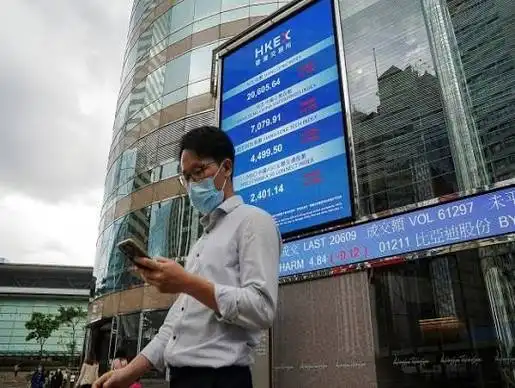
The benchmark CSI 300 index fell 0.4% by the midday break, while the Shanghai Composite Index dropped 0.7%, with both indices touching their weakest levels since early April. Hong Kong's Hang Seng Index also slipped 0.5%.
Focus shifts to China GDP data
Investor attention is now firmly on China's second-quarter gross domestic product (GDP) data due on Wednesday. A Reuters poll showed economists expect the world's second-largest economy to have expanded 4.5% in the April-June quarter, slowing from 5% growth recorded in the first quarter.
The anticipated slowdown has reinforced concerns about the strength of China's post-pandemic recovery, prompting investors to adopt a more defensive stance ahead of the data release.
Middle East tensions dent risk appetite
According to Reuters, market sentiment was further pressured after the United States carried out additional military strikes against Iran on Monday, while President Donald Trump reinstated a blockade of Iranian shipping.
The renewed geopolitical tensions have increased uncertainty across global financial markets, leading investors to reduce exposure to riskier assets and seek safer investments.
Mega IPO drains market liquidity
Chinese markets also faced pressure from the upcoming initial public offering of memory chipmaker Changxin Memory Technologies (CXMT), one of the country's largest semiconductor companies.
Reuters reported that the company will begin book-building on Wednesday to raise 29.5 billion yuan (about $4.35 billion) and is expected to list on July 27. The large fundraising exercise is seen as drawing liquidity away from the broader equity market.
As investors prepared to subscribe to the IPO, semiconductor, computer and big data stocks came under selling pressure.
Artificial intelligence-linked shares also weakened after heightened volatility in South Korean chipmakers reignited investor concerns about stretched valuations across the global AI sector.
The decline reflected growing caution toward technology stocks following their strong gains over recent months.
While technology stocks struggled, energy companies bucked the broader market trend.
Rising crude oil prices, driven by escalating conflict in the Middle East, lifted energy shares as investors anticipated stronger earnings for oil and gas producers if geopolitical risks continue to support commodity prices.
With China's GDP figures due shortly and geopolitical tensions remaining elevated, investors are expected to stay cautious in the near term. The outcome of the economic data, along with developments in the Middle East, is likely to determine the direction of Chinese and Hong Kong equities over the coming sessions.